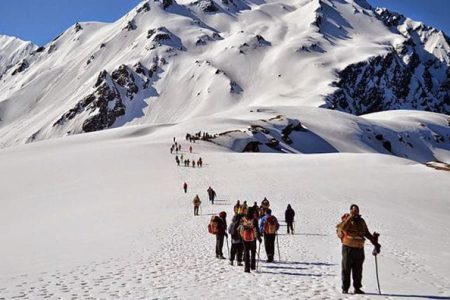
December to March (winter) is the best time to do the Nag Tibba Trek, as during the winter, you experience the Nag Tibba covered in blankets of snow, and it seems like a winter wonderland. This pristine summit never fails to make you experience tranquillity. Nag Tibba trek temperature during this time may fall as low as -4°.
April to June (Summer): During summer, you encounter splendid natural views that may not be noticeable at any other time of the year. Despite the sunny weather, it is much better than the hot weather on the plains. During summer, the temperature at the Nag Tibba trek lies between 2 and 14 °C.
July to September (Monsoon): It is not considered a good time to do the Nag Tibba trek in July or monsoon during rains because the likelihood of a landslide escalates. It gets extremely unsafe to be on hills during this time. On the flip side, the crowd density is low during the monsoon. So if you’re planning to do the Nag Tibba trek during the monsoon, don’t forget to carry a raincoat and other rain gadgets. You can expect a minimum temperature of 8 °C and a maximum temperature of 15 °C during the monsoon season.
October to November (post-monsoon): Post-monsoon is also considered one of the best times. Nag Tibba trek temperature lies between 14 and 22 °C, which is much more favourable than both summer and winter. Also, the weather is clear and sunny, suitable for camping and trekking.









Leave a review